

 Colregs
At night, vessels indicate their status to other mariners by way of lights, the color and position of each light communicates different information.
The Colgre(collision regulations) communication standard was adopted as a convention of the international maritime organization in 1972, with the goal of preventing collisions at sea.
Different color and placement of lights can communicate the following information about a vessel:
Type of vessel, length of vessel, which direction the vessel is heading (if it is facing toward, sidelong or away from your vessel), special circumstances and whether the vessel is moving, or if it isn't.


A few things to remember:
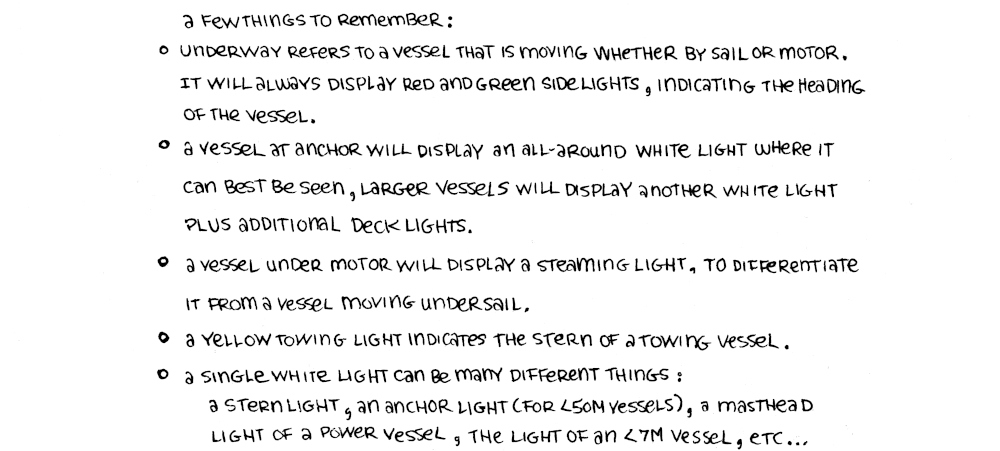
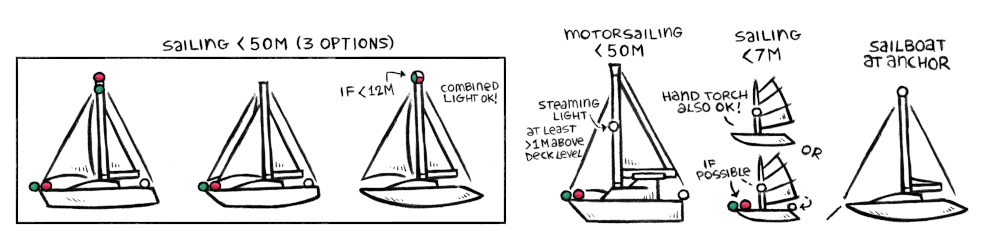
Under refers to a vessel that is moving, whether by sail or motor. It will always display red and green sidelights, indicating the heading of the vessel.
A vessel at anchor will display an all-around white light where it can best be best, larger vessels will display another white light plus additional deck lights.
A vessel under motor will display a steaming light, to differentiate it from a vessel moving under sail.
A yellow towing light indicates the stern of a towing vessel.
A single white light can be many different things: A stern light, an anchor light(for <50m vessels), a masthead light of a power vessel, the light of an <7m vessel, etc.
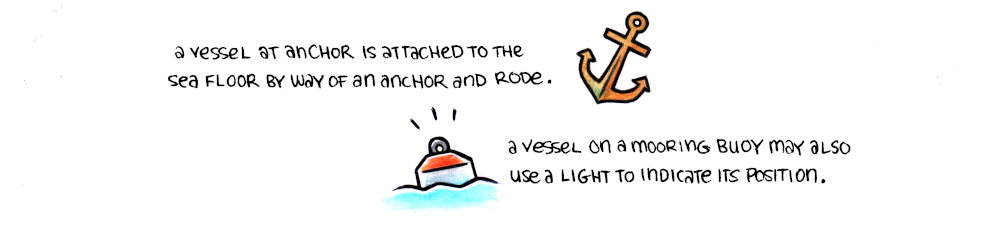
A vessel at anchor is attached to the sea floor by way of an anchor and rode.
A vessel on a mooring buoy may also use a light to indicate its position.
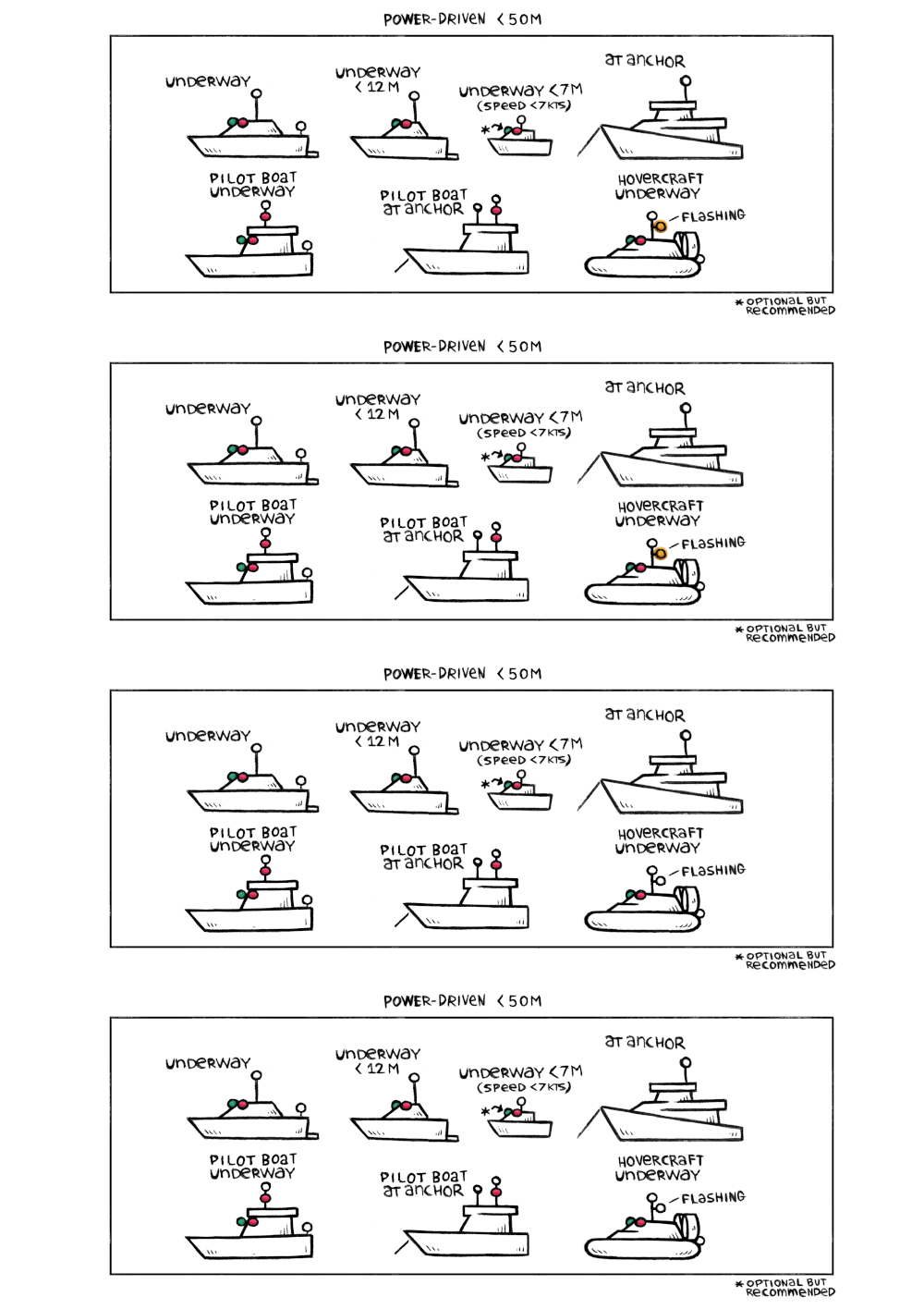

Pilot boats are small ships, operated by experienced harbour captains, that help guide larger ships in and out of ports.
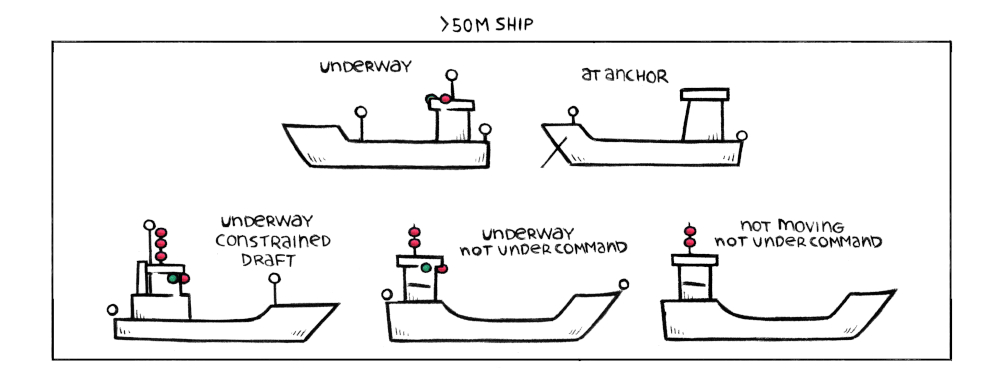
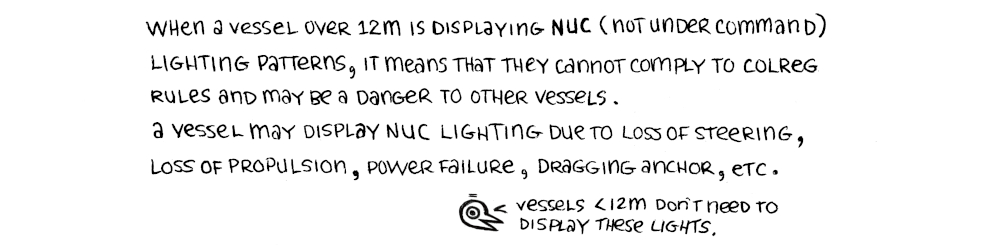
When a vessel over 12 m is display NUC (not under command) lighting patterns, it means that they cannot comply to colreg rules and may be a danger to other vessels.
A vessel may display NUC lighting due to loss of steering, loss of propulsion, power failure, dragging anchor, etc.
As a side note, vessels <12 m don't need to display these lights.
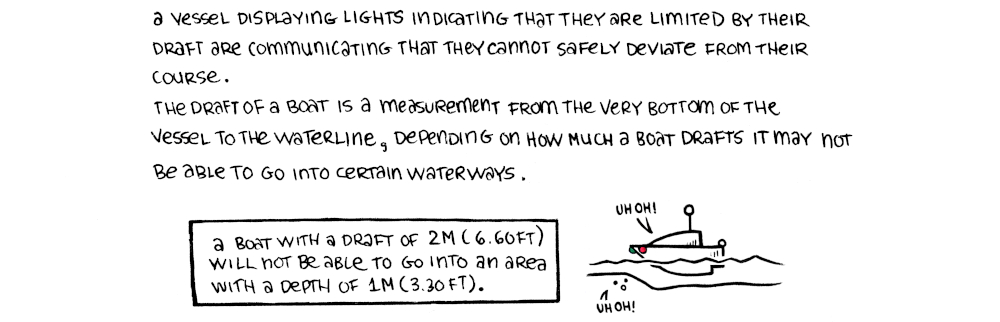
A vessel displaying lights indicating that they are limited by their draft are communicating that they cannot safely deviate from their course. The draft of a boat is a measurement from the very bottom of the vessel to the waterline, depending on how much a boat drafts it may not be able to go into certain waterways.
A boat with a draft of 2m (6.60ft) will not be able to go into an area with a depth of 1m (3.30ft).
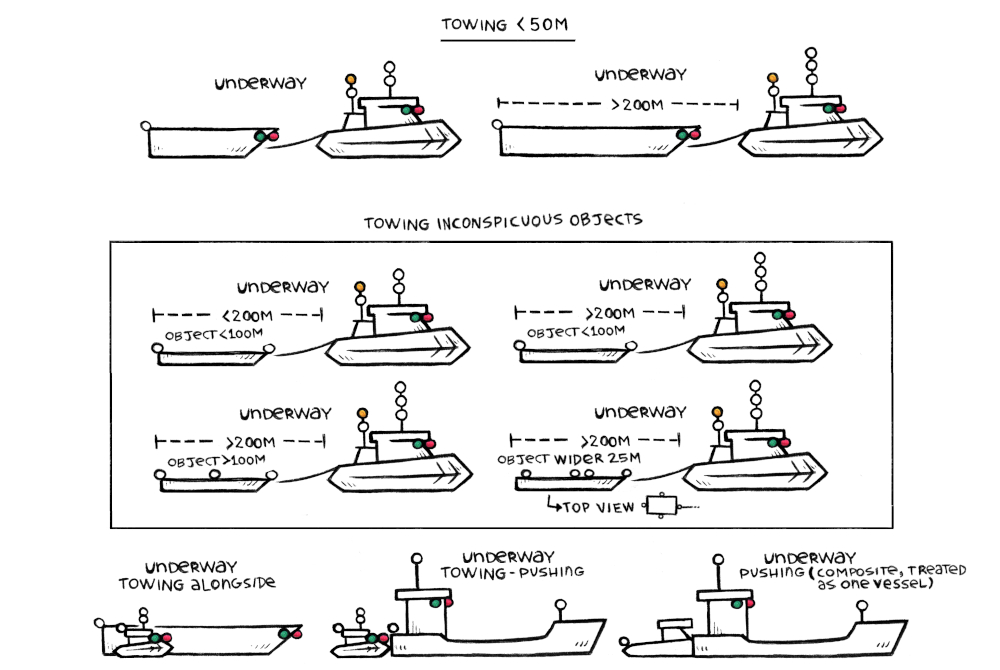

Sometimes a vessel being pushed and the pushing vessel are bound together rigidly and are then considered to be a single power vessel(and lit as such).
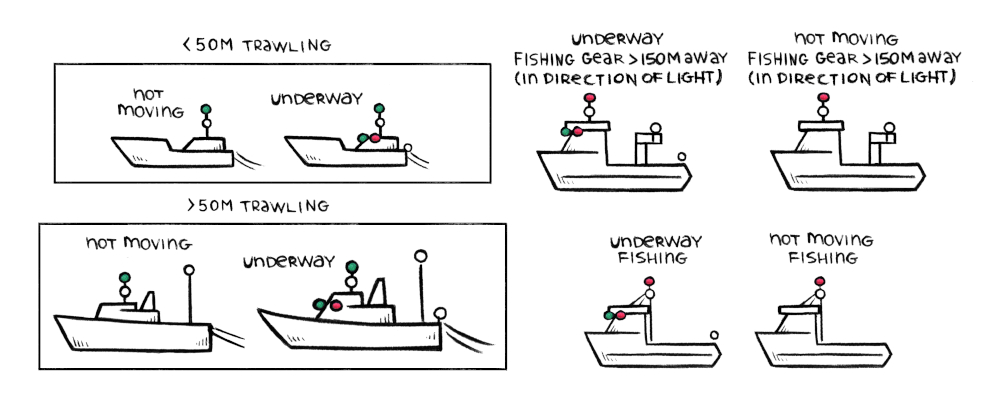
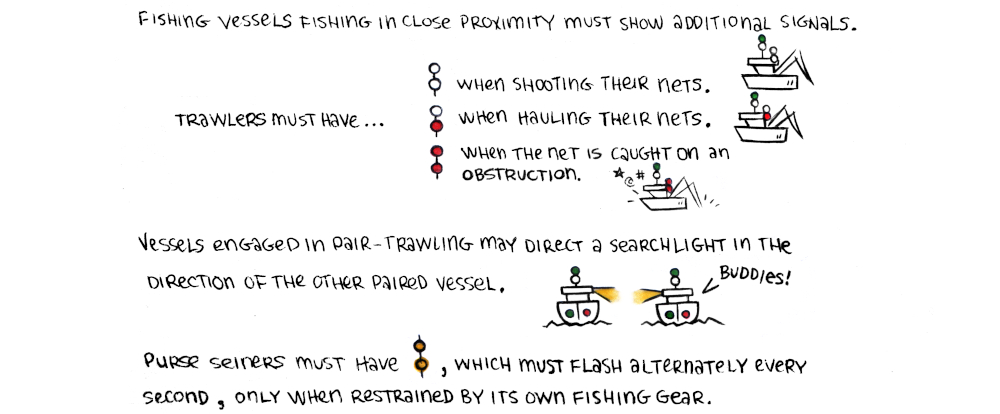
Fishing vessels fishing in close proximity must show additional signals
Trawlers must have...
2 white lights one over the other when shooting their nets.
a white light over a red light vertically one over the other when hauling their nets.
2 red lights one over the other when the net is caught on an obstruction.
Vessels engaged in pair-trawling may direct a searchlight in the direction of the other paired vessel.
Purse seiners must have 2 yellow flashing lights one over the other, which must flash alternately every second, only when restrained by its own fishing gear.

If restrained, it may move in a circle or start reversing.
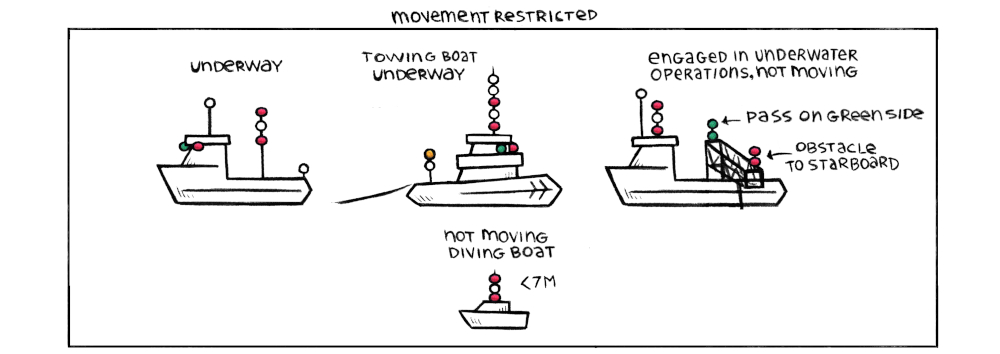
A vessel that is restricted in its movements (RAM, restricted in ability to manoeuvre) means that work being undertaken prevents them from moving out of the way of other vessels.
Examples of such activities include dreding, towing difficult objects, diving, underwater projects, etc.
As a sidenote, vessels under 12 m don't need to display such lights (except for diving boats).
